

DE / ENRequest a part →
Glass fibre is the standard for composite parts. For large-area cladding and visible parts, natural fibre is often the better calculation. Where that applies — and where it does not.
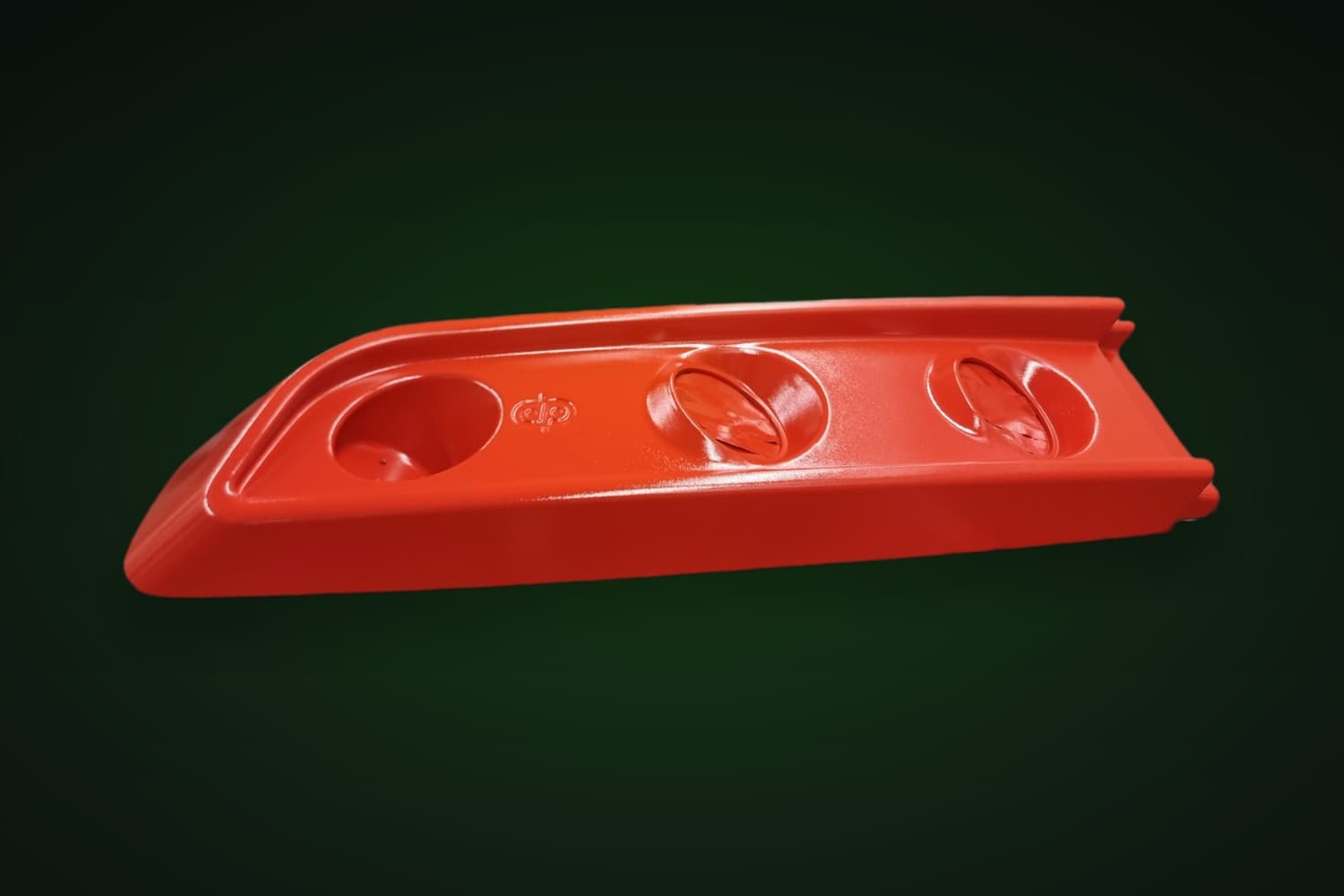
GFRP and NFRP are both fibre composites: reinforcing fibres in a polymer matrix. Design logic, dimensioning and shaping follow the same rules. Anyone designing GFRP parts today does not have to relearn for NFRP.
What changes is the fibre — and with it density, damping behaviour and raw-material base. That is precisely where the leverage on weight, cost and CO₂ footprint comes from.
Natural-fibre composite, glass fibre and aluminium side by side.
CO₂ footprint: own calculation based on measurements and database sources. Raw material base: refers to the reinforcing fibre or the metal.
Guide values from realized components — the specific design determines the actual figure.
* “Up to” values, depending on the specific application. CO₂: per part compared with the GFRP version, own calculation based on measurements and database sources.
A lighter cover flap — with comparable mechanical properties and lower material cost.
A large-area front skirt, manufactured more efficiently — through optimized natural-fiber cuts.
A large-area pop-up roof — light, stiff and with a high-quality natural-fiber visible surface.
The larger the surface and the more weight matters, the clearer the effect.
On construction and agricultural machinery: large, impact-resistant parts where every kilo affects handling.
Front skirts, masks and cladding with complex geometry and high surface requirements.
In caravan and motorhome construction: large surfaces where weight translates directly into payload.
Interior cladding and visible parts — fire requirements are assessed at the concept stage.
Large-area commercial-vehicle parts, ready to fit including inserts and fastening points.
Where the natural-fibre surface itself becomes the design argument.








We do not start with the tool but with the calculation. In a concept study we assess your existing part for feasibility, weight and part costs.

Send us a drawing, an existing GFRP part or an idea — we'll get in touch and assess the potential for natural fiber composite together.
Request a part →