
Industries
Technology
Projects
Company
Request a part
DE / EN
Industries

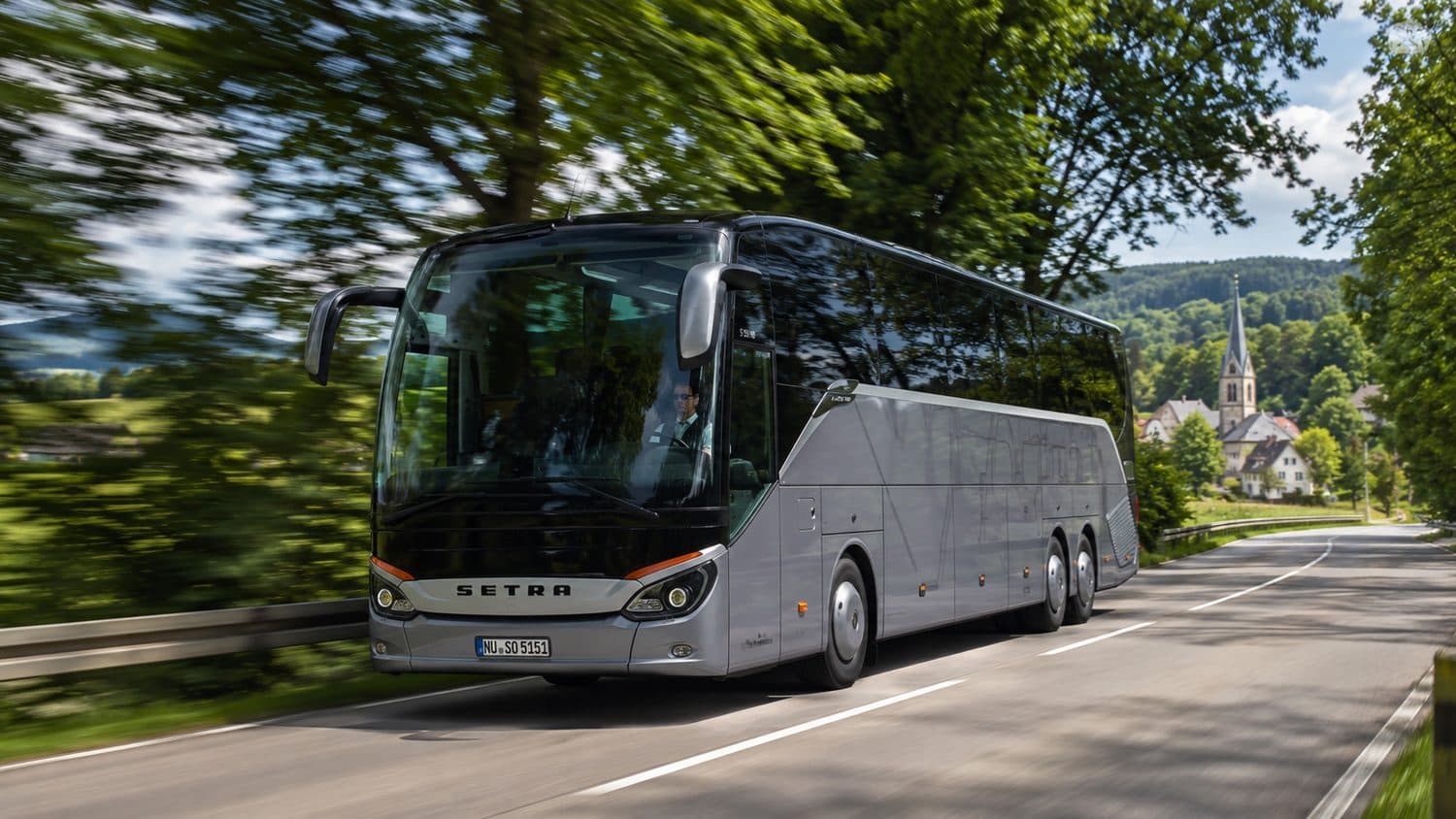
NFRP components for bus building.

Large-area cladding and functional parts for coaches and city buses — light, damping and series-ready.
Challenge

What really counts in Bus parts.

Today every part has to meet several goals at once — that is exactly where natural fiber composite comes in.

Components & applications

What we manufacture for Bus.

Front & rear masks

Large, complex parts with a Class-A-capable surface.

Roof elements

Light and stiff — good for center of gravity and consumption.

Side cladding

Large-area, damping and ready to fit.

Interior modules & cladding

Light interior parts with good acoustics.

Flaps & covers

Functional parts incl. fastening points.

Large-area parts that become lighter and quieter.

Benefit

Lighter — and more economical.

NFRP reduces not only weight but directly the part cost — with properties comparable to GFRP.

−15%
Part cost
−30%
Weight
−90%
CO₂

Why NFRP lowers the part cost

Less weight = less material

Lower density and an optimized layup reduce material usage per part — directly cost-effective.

High automation

Semi-automated impregnation and digitally defined processes reduce manual work and manufacturing cost.

Manufacturing efficiency

Short cycle time through the reusable vacuum hood and ready-to-fit delivery save follow-up costs.

Why natural fibre fits here

Large surfaces, small series — the economic challenge in bus building

Front and rear masks, roof elements and side cladding in bus building are large-area, geometrically demanding and built in comparatively small numbers. This combination makes tooling cost per part the decisive factor — and rules out processes that only become economical at six-figure volumes.

At the same time every kilogram counts twice: it reduces consumption and, on roof parts, affects the centre of gravity. Inside, acoustic comfort is added, which on large-area cladding depends substantially on the damping behaviour of the material. Fire-protection and functional requirements are assessed at the concept stage, before a part is designed.
In practice

Already realised — with measurable results.

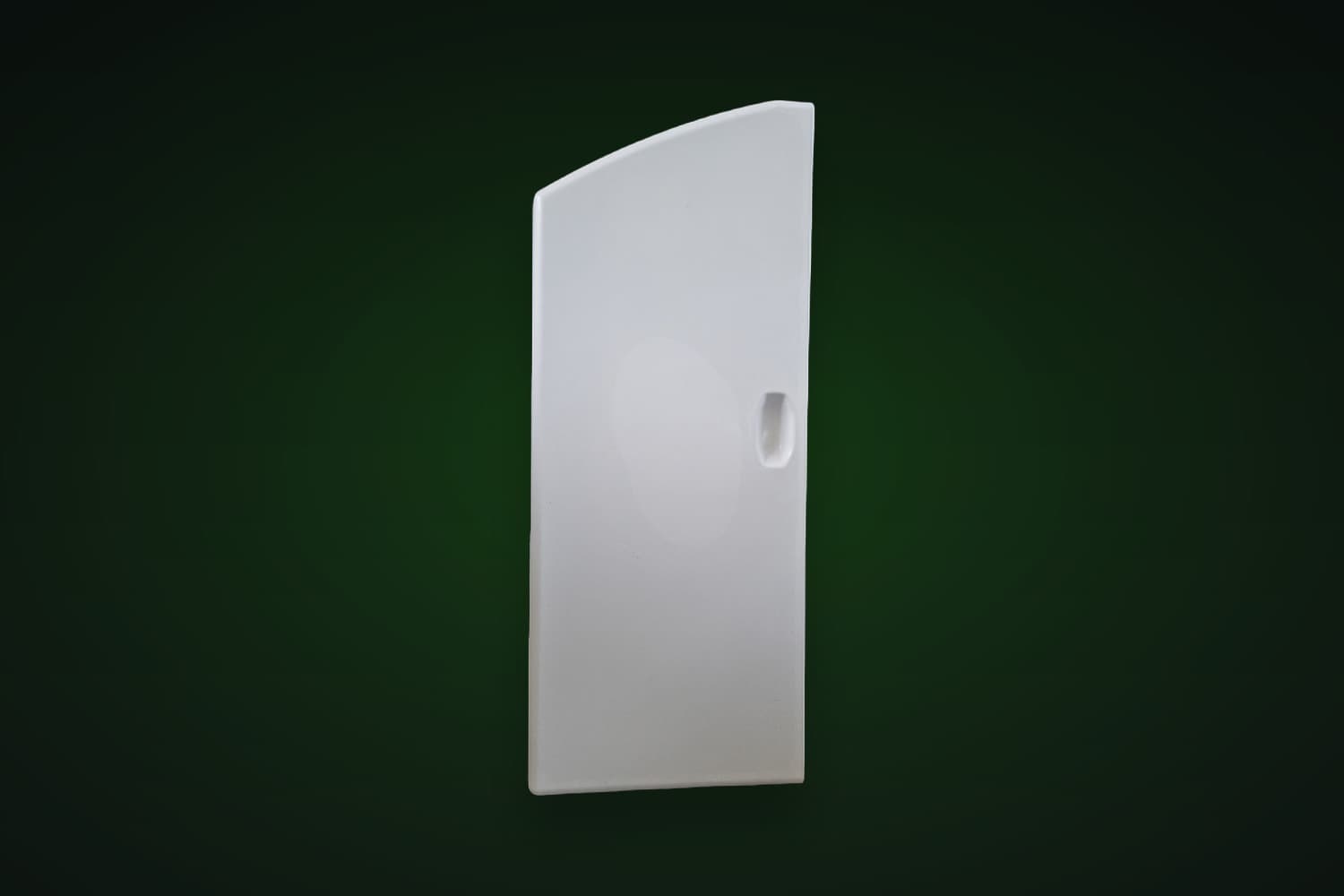
Cover flap, commercial vehicle
Commercial vehicle

Cover flap, commercial vehicle

−50%
Weight
  • Comparable deflection & pull-out at the mounting points
  • Lower material cost through higher material efficiency
  • Ready-to-fit component with a defined surface

From a single source

Concept, material, tooling, manufacturing and assembly with one partner — fewer interfaces, less risk.

Reproducible series

Digitally recorded process parameters ensure consistent part quality — up to ~5,000 units / year.

Our own technology

Patented NFK Wetpreg Molding and in-house material design as a real differentiator.

Trusted by leading OEMs & industrial companies
Daimler Truck
Traton
VDL
Carthago
Depoortere
CF Maier
Vöhringer
Radkutsche
EPAtec
How we work

From the part concept to the ready-to-fit series.

One continuous path — series-ready and reproducible.

01

Part concept & package

Requirements, packaging, interfaces — thought through from the first concept.

02

Load cases & engineering

Stiffness, temperature, vibration, weather and fastening points.

03

Material & layup

Natural-fiber plies, resin system, sandwich layup, local reinforcements.

04

Prototypes & sampling

Sample parts, demonstrators, fit trials, iteration on the real part.

05

Tooling & manufacturing

Prototype and series tooling, process window, trimming, quality assurance.

06

Finish & assembly

Gelcoat, painting, inserts, fastening points, ready-to-fit delivery.

The easy entry point

Start with an NFRP concept study.

You don't have to commit right away: send us an existing GFRP part, a drawing or an idea. We assess the potential — and you see whether the path is worth it.

  • Potential assessment: weight, cost and properties
  • Direct comparison NFRP vs. your current GFRP part
  • A concrete assessment on the real part — no theory
  • A clear recommendation for the next steps
Request a concept study
Frequently asked

Questions from this sector

Is natural-fibre composite economical at small volumes?
The material itself does not rule out small series — what matters is the manufacturing route. Wetpreg moulding is designed for small and medium series and requires no investment in full automation.
Can Class-A-capable surfaces be achieved?
We produce front and rear masks with a defined visible surface. Which surface quality is achievable in a specific case is clarified from geometry and requirement during the concept phase.
What about fire protection in the interior?
Fire behaviour can be adjusted through additives in the resin system. We assess the specific requirements of your project at the concept stage — reliable statements are made per part, not as a blanket claim.
Which parts deliver the greatest effect in bus building?
Large-area, stiffness-driven parts: roof elements, side cladding and front and rear masks. That is where weight comes from surface area, and where the lower density has the strongest effect.

Let's talk about your component.

Send us a drawing, an existing GFRP part or an idea — we'll get in touch and assess the potential for natural fiber composite together.

Request a part

Related