

DE / ENRequest a part →
Cabin shells, roof modules, interior and exterior cladding from natural-fibre composite — light, weather-resistant and with a high-quality visible surface. We also obtain fire-protection certifications, for example to EN 45545 or TL 1010.
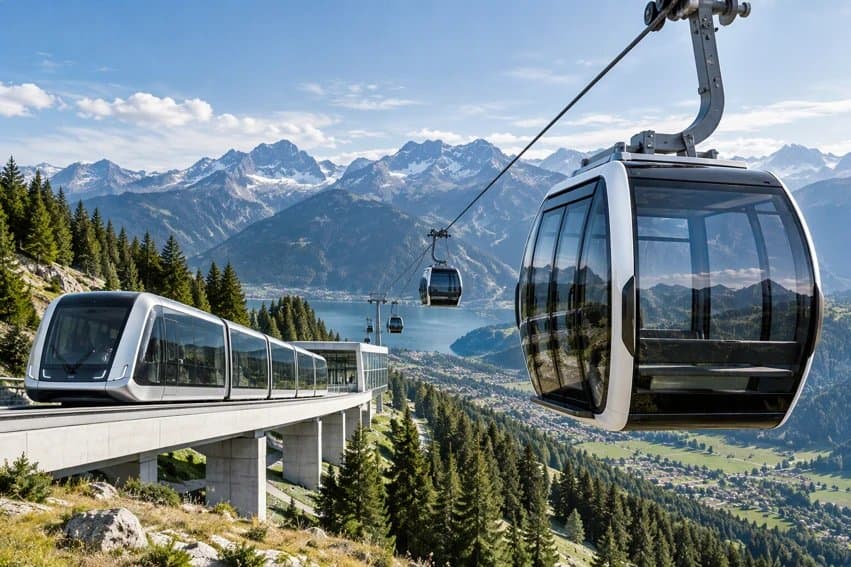
From concept to series: natural-fibre composite designed for the requirements of cable cars and people movers.
Large-area and light — with a defined visible surface.
Stiff and light as a sandwich part, weather-resistant.
Light interior parts with good damping.
Seat and back shells for chairlifts — natural-fibre composite instead of plastic and foam.
Front, rear and side parts for compact vehicles.
Robust cladding, modular and delivered ready to fit.
Lighter cabins — less load on rope and drive.
NFRP reduces not only weight but directly the part cost — with properties comparable to GFRP.
* “Up to” values, depending on the specific application. CO₂: per part compared with the GFRP version, own calculation based on measurements and database sources.
Lower density and an optimized layup reduce material usage per part — directly cost-effective.
Semi-automated impregnation and digitally defined processes reduce manual work and manufacturing cost.
Short cycle time through the reusable vacuum hood and ready-to-fit delivery save follow-up costs.
With cable cars and people movers, cabin weight does not just affect a single vehicle: it multiplies by the number of cabins on the system and acts on rope, drive and energy demand. Lighter cabin shells, roofs and cladding create room for more payload or a leaner design.
At the same time, the requirements are high: weather, UV and temperature cycles in continuous operation, high-quality visible surfaces for passengers, and fire protection. Natural-fibre composite brings low weight and good damping. Where needed, we set fire behaviour through additives in the resin system and obtain the necessary certifications, for example to EN 45545 or TL 1010.
Hemp and flax fibres bring properties that benefit the cabin, the installation and passengers alike.
Natural fibres have a much lower density than glass fibres. That reduces part weight — and with it the load the whole installation carries.
Natural fibres damp vibration and sound better than glass fibres. That benefits acoustics and ride comfort in the cabin.
Hemp and flax come from European cultivation. We state the fibre content and CO₂ footprint for your part — as reliable figures rather than blanket promises.
We developed our process specifically for natural fibres: high fibre volume fractions, controlled moisture and reproducible quality — without an expensive autoclave.
Resin system and gelcoat protect the part against moisture, frost and UV. Climate-cycle and ageing tests are a fixed part of our development.
Conventionally painted or with visible natural fibre as a design feature — for example in the interior or on the chair shell.
What matters in cabin building, we make binding in the quotation — not at first-article inspection.
Material, layup and design from a single source — with a weight and cost comparison against your current part.
We openly name gelcoat and resin system and align painting conditions and paint system with you before the first part goes into the paint shop.
We agree wall thicknesses, radii, overlaps and tolerances together. Sample panels for your bonding and joining trials come with it.
Cable cars are approved under Regulation (EU) 2016/424 and harmonised standards. We provide test reports, certificates and first-article documentation for your acceptance.
Cabins are shipped worldwide and assembled on site. We deliver ready-to-fit modules — with transport racks and defined storage conditions.
Sample parts and prototypes from a quantity of one, series of up to 5,000 parts per year — also as additional capacity alongside your regular supplier.
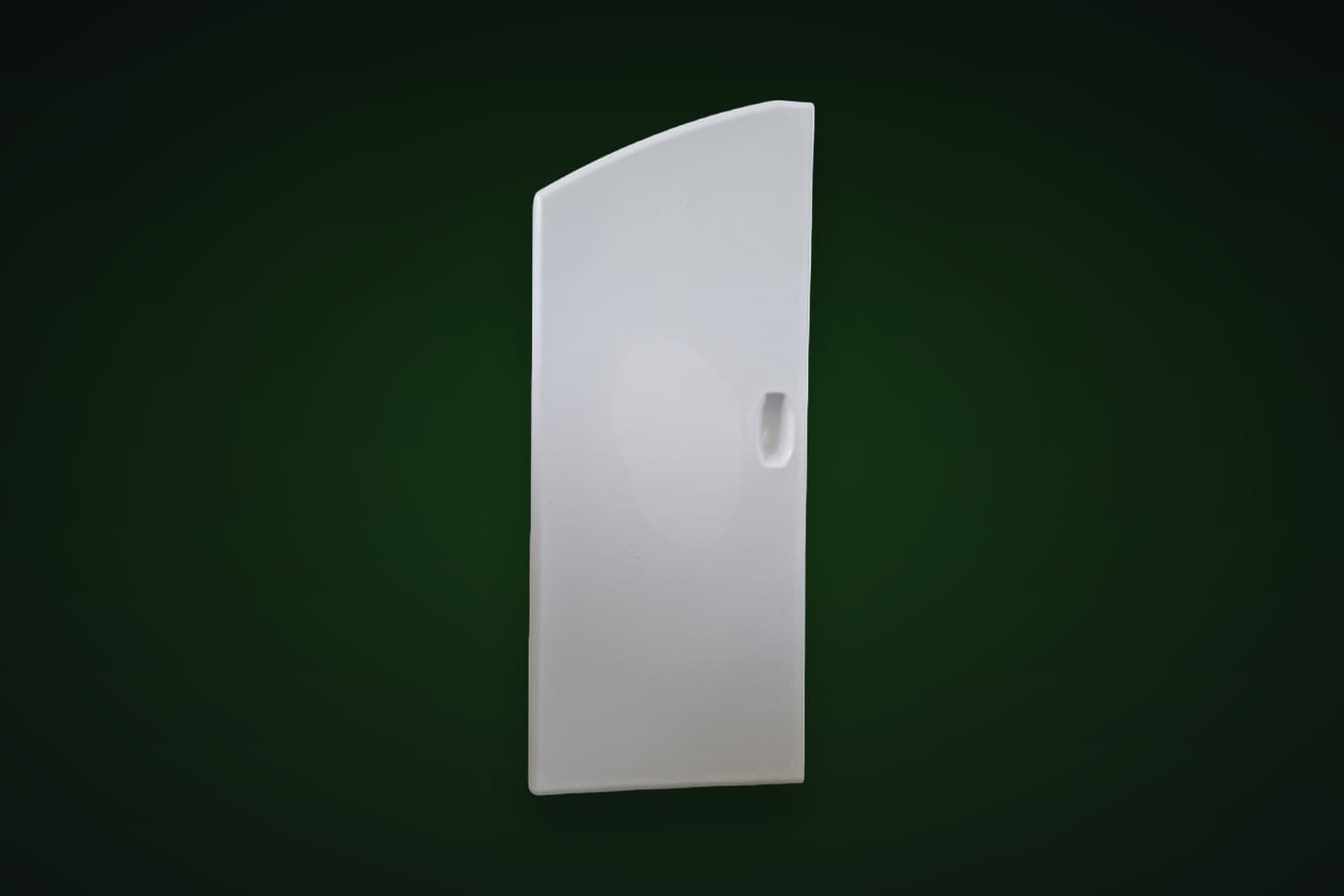
Concept, material, tooling, manufacturing and assembly with one partner — fewer interfaces, less risk.
Digitally recorded process parameters ensure consistent part quality — from prototype to several thousand units per year.
Patented NFK Wetpreg Molding and in-house material design as a real differentiator.





One continuous path — series-ready and reproducible.
Requirements, packaging, interfaces — thought through from the first concept.
Stiffness, temperature, vibration, weather and fastening points.
Natural-fiber plies, resin system, sandwich layup, local reinforcements.
Sample parts, demonstrators, fit trials, iteration on the real part.
Prototype and series tooling, process window, trimming, quality assurance.
Gelcoat, painting, inserts, fastening points, ready-to-fit delivery.
You don't have to commit right away: send us an existing GFRP part, a drawing or an idea. We assess the potential — and you see whether the path is worth it.

Send us a drawing, an existing GFRP part or an idea — we'll get in touch and assess the potential for natural fiber composite together.
Request a part →